
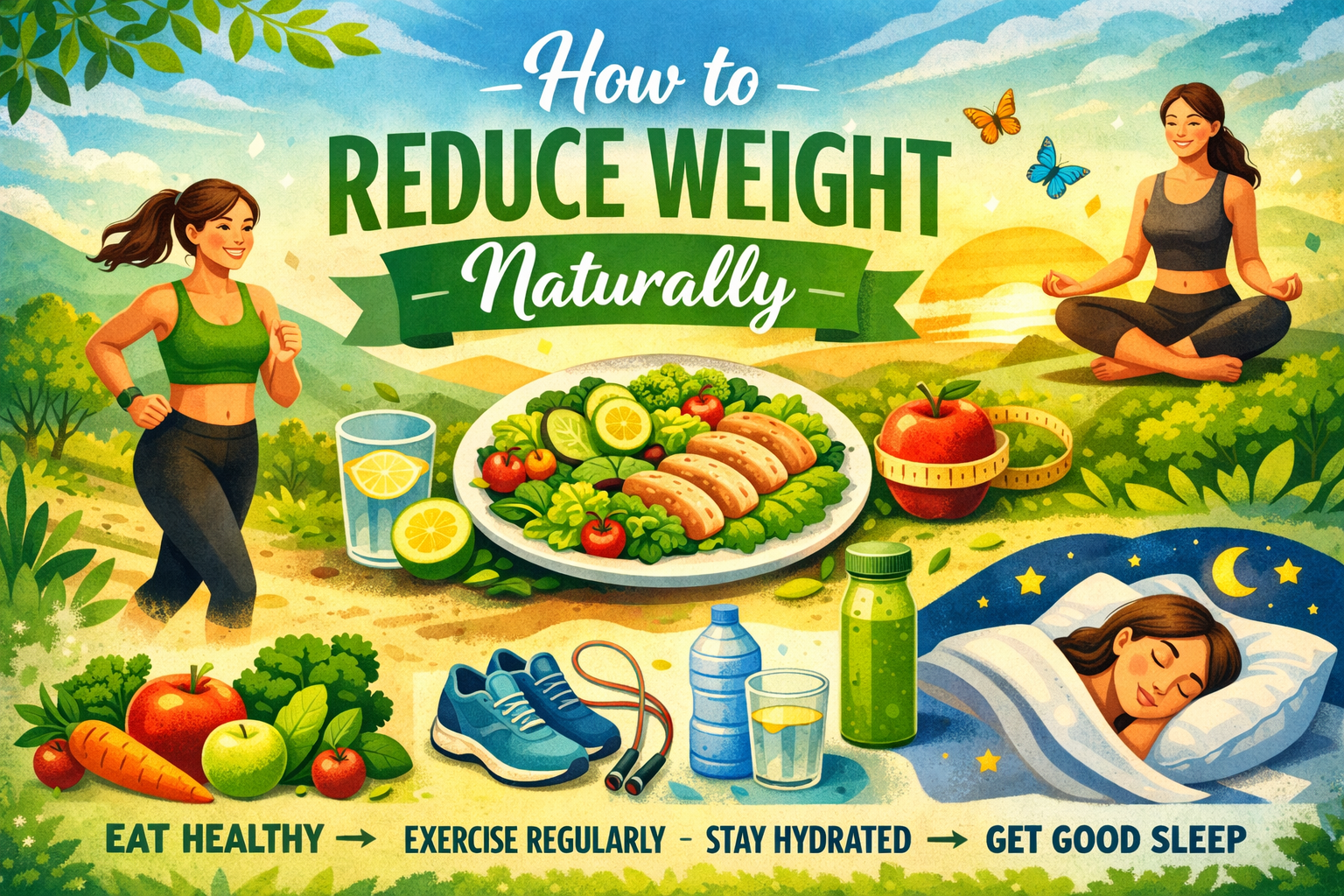
Weight gain has become a prevalent issue for people of all ages in today’s modern lifestyle. So, How to Reduce Weight Naturally? The primary causes of rising body weight are stress, poor eating habits, inactivity, long periods of sitting, and abnormal sleep patterns. Many people seek rapid weight loss, but they frequently use improper practices or excessive diets that are harmful to their bodies.
It is not necessary to starve yourself or take risky shortcuts in order to lose weight. It involves adopting sensible, healthful, and steady lifestyle adjustments. When done properly, losing weight is safe, organic, and long-lasting.
This comprehensive guide will help you get off to a good start if you’re searching for easy and efficient weight loss methods.
The Significance of Sustaining a Healthy Weight
A healthy body weight must be maintained for general wellbeing. Being overweight raises the risk of numerous major health issues.
Among the frequent issues brought on by being overweight are:
Diabetes
elevated blood pressure
Heart conditions
Joint discomfort
Weariness
Problems with breathing
Lack of confidence
Stress in the mind
Your body works better and you feel more energetic and self-assured when you maintain a healthy weight.
Recognise that losing weight takes time.
Anticipating rapid outcomes is one of the most common misconceptions people make. Losing weight in a healthy way takes time.
A weekly weight loss of 0.5 to 1 kg is seen as sustainable and safe. Weakness, nutritional deficiencies, and weight gain are frequently the results of rapid weight reduction.
Keep in mind that consistency is more crucial than speed.
1. Develop Better Eating Practices
The most crucial factor in weight loss is your nutrition. Exercise cannot make up for poor food habits.
Select Healthful Foods
Add the following to your meals every day:
Fresh produce and fruits
Whole grains
Beans with lentils
Seeds and nuts
Dairy products with little fat
Lean protein
These foods decrease needless cravings and prolong feelings of fullness.
Cut back on processed and junk food.
Avoid or restrict:
Fast food
Snacks fried
Bakery goods
Sugar-filled beverages
Foods in packages
Instant noodles
Candy
These foods are the primary cause of weight gain since they are high in calories and low in nutrients.
Regulate the Size of the Portion
Weight gain is still possible even while eating a lot of nutritious food.
Advice on how to manage portions:
Make use of smaller plates.
Eat slowly.
When you are 80% full, stop eating.
Steer clear of second servings.
Avoid eating while watching television.
Controlling overeating can be achieved by paying attention to your body’s hunger cues.
Consume Food at Regular Times
Meal skipping boosts fat storage and lowers metabolism.
Adhere to this pattern:
Breakfast: One hour after waking up
Lunch: On schedule
Dinner should be eaten two to three hours before bed.
wholesome between-meal snacks
Your metabolism remains active when you eat regularly.
2. Boost Exercise
To increase fitness and burn calories, exercise is crucial.
You don’t require a gym membership or pricey equipment. If carried out consistently, simple everyday tasks are sufficient.
Top Workouts for Losing Weight
Strolling
One of the simplest strategies to reduce weight is to walk for 30 to 45 minutes every day.
Running or Jogging
helps you burn more calories faster.
Riding a bicycle
beneficial to leg strength and heart health.
Rope Skipping
incredibly efficient in burning fat.
Yoga
lowers weight gain brought on by stress and increases flexibility.
Strength Training
boosts metabolism and builds muscle.
Develop the Habit of Exercise Every Day
Advice on maintaining consistency:
Select enjoyable hobbies.
Work out every day at the same time.
Increase progressively after starting out slowly.
Work out with your friends.
Monitor your progress.
Positive effects can be achieved with just 20 minutes of daily exercising.
3. Increase Your Water Intake
Water is essential for losing weight.
People frequently mistake thirst for hunger and overeat.
Water Drinking’s Weight Loss Benefits
decreases appetite
increases metabolism
enhances digestion
eliminates toxins
Stops overeating
Tips for Drinking Water
Before meals, have a glass.
Keep a bottle of water with you.
8–10 glasses should be consumed each day.
Use water instead of soft drinks.
In the morning, sip on some warm water.
Drinking enough water promotes fat burning.
4. Make Time for Sleep
Body weight is directly related to sleep.
Sleep deprivation lowers metabolism and raises hunger hormones, which causes weight gain.
Good Sleep Practices
7–8 hours of sleep every day
Keep your sleep schedule consistent.
Don’t use screens right before sleeping.
Keep the bedroom quiet and dark.
Steer clear of late-night snacking.
Energy levels and hunger are regulated by getting enough sleep.
5. Effectively Handle Stress
One of the underlying causes of weight gain is stress.
Stress causes your body to generate hormones that promote the storage of fat, particularly around the abdomen.
Strategies for Stress Reduction
Deep breathing and meditation
Yoga
Playing music
Being in nature
Speaking with loved ones
Perusing literature
Emotional eating can be avoided by reducing stress.
6. Steer clear of mindless and emotional eating
Many people eat to cope with feelings like boredom, melancholy, anger, or loneliness rather than hunger.
Ways to Manage Emotional Consumption
Determine what triggers you.
First, sip on some water.
Go for a quick stroll.
Take a break.
Stock up on nutritious snacks.
Don’t keep junk food in your house.
Controlling weight is improved by learning to eat thoughtfully.
7. Increase Your Fibre and Protein Intake
Fibre and protein are necessary for weight loss.
Protein’s Advantages
prolongs the feeling of fullness
lessens cravings
Maintains muscle
increases metabolism
Eggs, beans, lentils, milk, yoghurt, and almonds are some of the sources.
Fiber’s advantages
enhances digestion
regulates appetite
lowers the consumption of calories
Sources: Whole grains, seeds, fruits, and veggies
Incorporate fibre and protein throughout each meal.
8. Establish a Healthful Daily Schedule
Maintaining discipline is aided by a regimented schedule.
An Example of a Weight Loss Program
Good morning.
Get up early, take a stroll, stretch, and drink some water.
Morning meal
Low-sugar, high-protein dinner
Daytime
Avoid junk food, eat a balanced lunch, and stay active.
Evening
A nutritious snack and some light exercise
At night
Avoid screens, have a light dinner, and go to bed early.
Healthy life is simple with a solid schedule.
9. Establish Reasonable Weight Loss Objectives
Unattainable objectives result in disappointment.
Rather than stating, “I want to lose 20 kg in a month,”
Declare: “This month, I will shed two kilograms.”
Examples of Objectives
Take a 30-minute walk every day.
Cut back on sugar consumption
Increase your water intake.
Steer clear of quick food.
Go to bed before eleven o’clock.
Over time, small goals lead to big outcomes.
10. Monitor Your Development
You stay motivated when you track.
You can monitor:
Weight of body
Size of waist
Everyday actions
intake of water
Time spent exercising
Consumption patterns
Keep track of your progress with a notepad or a smartphone app.
Honour advancements rather than merely figures.
11. Steer clear of weight loss myths
People are confused by a lot of misleading beliefs.
Typical Myths
Meal skipping aids in weight loss; starvation is beneficial; only the gym is effective; supplements are required; and carbohydrates are always bad.
The truth is that an active lifestyle and a balanced diet are sufficient.
12. Remain Patient and Consistent
You might not see results on some days. Don’t give up.
Losing weight is not a straight line. There will be fluctuations.
The important thing is to keep going.
Progress is progress, no matter how slow.
13. Develop a Lifestyle of Weight Management
Losing weight is not a short-term endeavour.
Make it your way of life.
Select:
Consume nutritious food every day.
Frequent physical activity
Rest well.
Thinking positively
Self-control
It becomes simple to maintain weight if these become habits.
In conclusion
One of the best choices you can make for your confidence and health is to lose weight organically. Extreme diets, risky medications, and excruciating exercise are not necessary.
You can lose weight safely and permanently by eating a healthy diet, exercising, drinking plenty of water, controlling your stress, getting enough sleep, and maintaining consistency.
Keep in mind that daily small adjustments have significant effects.
Begin now.
Remain concentrated.
Have faith in the process.
Your body is ready for you in good health.